Russia will end person-to-person crypto trades in 2027
On this page
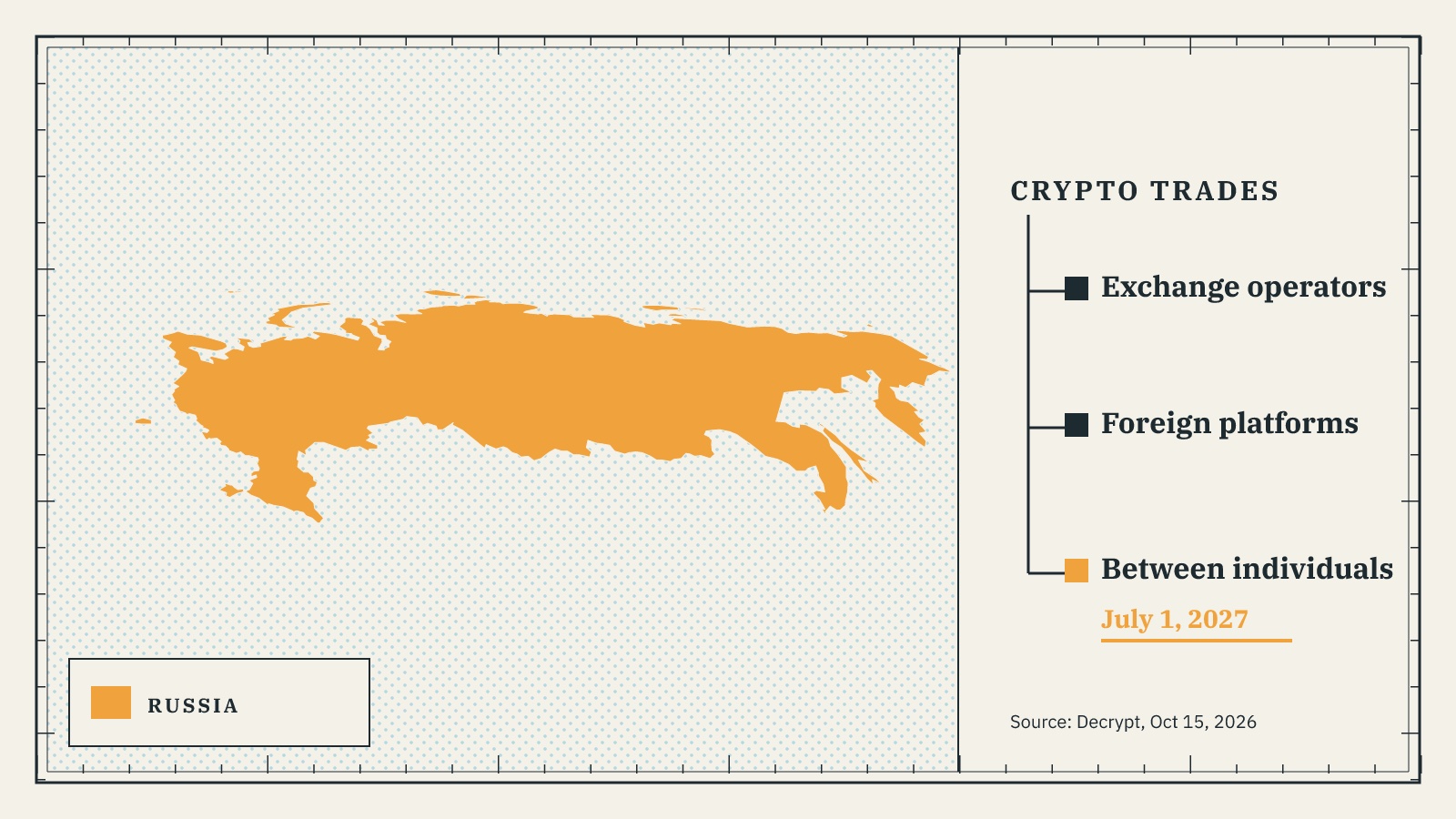
From July 1, 2027, people in Russia will no longer be allowed to trade crypto directly with each other, the Bank of Russia has confirmed, according to Decrypt. If you hold coins there, the change decides who you may trade with, where your coins may sit and how much you may buy. This article walks through the rules in plain words.
What the central bank confirmed
The Bank of Russia set out the timeline in updated guidance on its website on October 12, Decrypt reported. The rules come from federal law 282-FZ, which covers digital currencies and digital rights. President Vladimir Putin signed it on August 4, and it took effect on September 1.
Article 30 of that law lists the crypto actions residents can take without a licensed middleman. From July 2027, trades between two private people are no longer on that list. After that date, residents may trade only through, or directly with, licensed firms. In practice these are brokers licensed by the central bank and crypto exchange operators listed in its registry.
Why this matters for ordinary holders
For many Russians, peer-to-peer trading has been the everyday route into crypto. According to Decrypt, ever since CommEX bought Binance's Russian arm in 2023, a common method has been to send rubles to a seller's bank card and receive USDT, a token meant to track the US dollar. The new rules end that model.
The rules also reach your wallet. The regulator says individuals may not move crypto out of a digital account into their own non-custodial wallet. Sending coins person to person through addresses run by a licensed digital depository is barred too, even to settle a trade.
Banks are part of the picture. Speaking to Kommersant FM, Andrei Tugarin of the law firm GMT Legal, where he is managing partner, said that from July 1, 2027, Russian banks must refuse to fund client wallets on foreign platforms. He said they also must reject rubles cashed out from those platforms.
There are limits on what you may buy. If you are not a qualified investor, you must pass a test first. Your yearly purchases are then capped at 300,000 rubles (about $3,600), and only Bitcoin, Ethereum and USDT are on the list for you.
Qualified investors have no cap. Ordinary users may not lend crypto either; only licensed firms such as brokers and clearing houses may act as lenders.
Who will run the licensed market
Exchange operators must be Russian companies with equity of 15 million rubles (about $179,000) or more, listed in the central bank registry. Unregistered operators may keep working until July 1, 2027. Sberbank, a Russian bank, joined the registry on October 12, and Interfax said it aims to start offering crypto products on December 1. VTB and T-Invest Lab are also registered.
Spending crypto inside Russia stays banned, so you still cannot pay for goods and services with it. Crypto is allowed in foreign trade settlements. Kaplan Panesh, deputy chair of the Duma budget committee, described that carve-out as a way around sanctions when the bill passed its first reading in April.
Words to know
A few terms come up again and again in these rules.
- Peer-to-peer trade: two people swap money for coins directly, without a regulated firm in the middle.
- Non-custodial wallet: a wallet where you hold the private keys yourself, instead of a company holding them for you.
- Digital depository: a licensed firm that keeps a record of who owns which coins.
What to keep in mind
These rules change counterparty risk, meaning the risk tied to whoever holds or handles your coins. Moving everything to licensed firms means trusting those firms and the rules they follow.
For calm context, bitcoin's last daily close in Finvane's data was $82,059 on Bybit as of October 16. That is up 7.7% over 30 days and 81% of the way up its 90-day range. Price, though, is not what this news changes. It changes the route your money takes.
Sources
This analysis is based on the reports below. Open them for the full original coverage.
Written with AI assistance from the public sources listed below, with automated checks on figures and quotes. It is not investment advice. Spotted an error? Email hello@finvane.blog.
For education only, not financial advice. Crypto assets are volatile and you can lose money.
Get one like this every morning
A 5-minute briefing in your inbox each weekday. Free, unsubscribe anytime.
Prefer quick updates? Follow @pakaoqp on TelegramMarket now
Latest news
- Bitcoin Core merges privacy fix for its opt-in private broadcast featureCryptoSlate · October 9, 2026
- Senator Blumenthal questions Cantor Fitzgerald over its Tether tiesCoinDesk · October 9, 2026
- Ethereum's Sepolia testnet activates Glamsterdam with a bigger gas limitDecrypt · October 9, 2026
- Greece drafts 15% tax on crypto capital gains, reports sayBitcoin Magazine · October 9, 2026