Proof of reserves: what a reserve report can and cannot prove
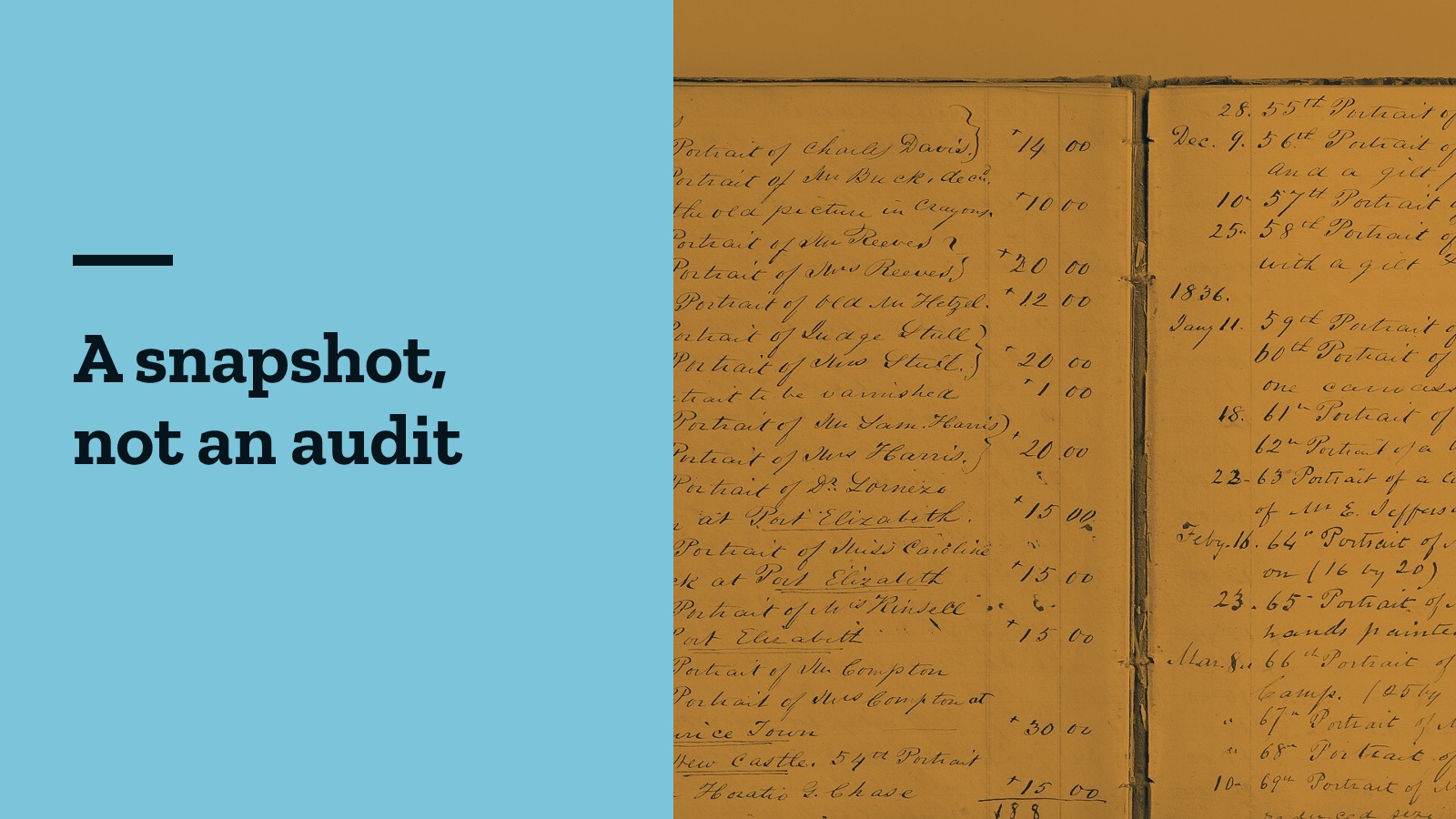
Photo: John Carlin / Wikimedia Commons, CC0 (cropped, duotone)
On this page
Staff at the PCAOB, the body that oversees auditors in the United States, caution that a crypto platform's proof-of-reserves report is not an audit. For anyone who keeps coins on an exchange, that matters: a reassuring reserve report does not, on its own, show that your money is safe or that you can always withdraw it. This article explains what these reports do, what they leave out and how to think about them calmly.
What happened
A Finvane explainer published on 2026-10-12 looked at proof-of-reserves reports, a kind of document many crypto platforms now publish to reassure customers. The starting point was a caution from staff in the investor-advocate function of the PCAOB, the Public Company Accounting Oversight Board. That board supervises the firms that audit public companies in the United States.
Their message was simple: a proof-of-reserves report is not an audit. As the explainer noted, such a report lists chosen assets as they stood at one particular moment. According to the PCAOB staff, it may not cover what the platform owes its customers. It may not reveal whether the assets were borrowed just to appear in the snapshot. And it may not show whether those assets were still there afterwards.
The Finvane explainer summed up the point in one line: "A reserve snapshot alone does not establish solvency or withdrawal access."
How a proof-of-reserves report works
Exchanges and other custodial platforms hold coins on behalf of their users. Because customers cannot see inside the company, some platforms publish evidence that they really hold the assets they claim. That evidence is usually called proof of reserves.
In practice, a platform points to certain wallet addresses and shows the balances in them at a chosen time. Sometimes a third party checks that the platform controls those wallets. Sometimes the platform also lets each user confirm that their own account balance was included in the customer total. The result is a picture of assets on one day, often at one exact moment.
That picture can be useful. It is better than no information at all, and it can show that a platform did control a large pool of coins when the report was made. The problem is what the picture does not include.
What the snapshot leaves out
The PCAOB staff concerns point to three gaps. Each one is easy to miss if you only look at the headline balance.
- Liabilities. A report may list assets without listing everything the platform owes. A company can hold a lot of coins and still owe customers and lenders even more.
- Borrowed assets. A report may not show whether some of the assets were borrowed for a short time so that the balance looked healthy on the day of the snapshot.
- What happened next. A report may not show whether the assets stayed available after the snapshot. Coins can be moved, lent out or pledged the following day.
This is why the Finvane explainer stressed that a wallet balance can be completely real and still fail to prove that the platform can repay every customer claim. Real coins in a wallet answer only one question: did the platform control these assets at that moment? They do not answer whether the platform could pay everyone back if all customers asked at once.
Why it matters to an ordinary holder
If you keep crypto on an exchange, you do not hold the coins directly. You hold a claim on the platform, a promise that it will give you your coins when you ask. Whether that promise is good depends on the whole business: what it owns, what it owes and how it manages both over time.
A proof-of-reserves report speaks only to one side of that equation, and only for one moment. It does not prove solvency, which means having enough assets to cover all debts. It also does not prove withdrawal access, which means you can actually get your funds out when you want them. A platform could pass a snapshot and still pause withdrawals later if it runs into trouble.
This does not mean every platform that publishes such a report is hiding something. A platform can publish one in good faith. The point is that the report has limits, and a beginner should not treat it as a seal of safety. The word audit carries a specific meaning, and the PCAOB staff were clear that these reports do not meet it.
Words to know
A few terms come up again and again when people discuss exchange safety.
- Proof of reserves: a report showing that a platform controlled certain assets at a specific moment, usually by pointing to wallet balances.
- Liabilities: what a company owes, including the coins and money it must return to customers.
- Solvency: having enough assets to cover all liabilities. A platform that is insolvent cannot pay everyone back in full.
What to keep in mind
Treat a proof-of-reserves report as one piece of information, not a final answer. When you read one, ask a few plain questions. Does it say anything about liabilities, or only about assets? When was the snapshot taken, and how old is it now? Who checked it, and did they describe their work as an audit or as something narrower? If the report is silent on these points, the gap is part of the story.
It also helps to remember the basic trade-off of leaving coins on any platform. Convenience comes with the risk that the platform cannot return your funds when you need them. Some holders choose to keep part of their coins in a wallet they control themselves, while others prefer the convenience of a platform; neither option is free of risk. Self-custody brings its own responsibilities, such as protecting your recovery phrase and avoiding fake support accounts that try to steal it.
Finally, be wary of anyone who presents a reserve report as proof that nothing can go wrong. A snapshot can be honest and still incomplete. The calm approach is to read it for what it is: a useful glimpse of assets on one day, not a complete picture of the company and not a promise that withdrawals will always work.
Sources
- Finvane Telegram channelOctober 12, 2026
Written with AI assistance from the public sources listed below, with automated checks on figures and quotes. It is not investment advice. Spotted an error? Email hello@finvane.blog.
For education only, not financial advice. Crypto assets are volatile and you can lose money.
Get one like this every morning
A 5-minute briefing in your inbox each weekday. Free, unsubscribe anytime.
Prefer quick updates? Follow @pakaoqp on TelegramMarket now
Latest news
- Bitcoin Core merges privacy fix for its opt-in private broadcast featureCryptoSlate · October 9, 2026
- Senator Blumenthal questions Cantor Fitzgerald over its Tether tiesCoinDesk · October 9, 2026
- Ethereum's Sepolia testnet activates Glamsterdam with a bigger gas limitDecrypt · October 9, 2026
- Greece drafts 15% tax on crypto capital gains, reports sayBitcoin Magazine · October 9, 2026