FinCEN drops its self-hosted wallet rule: what changes
On this page
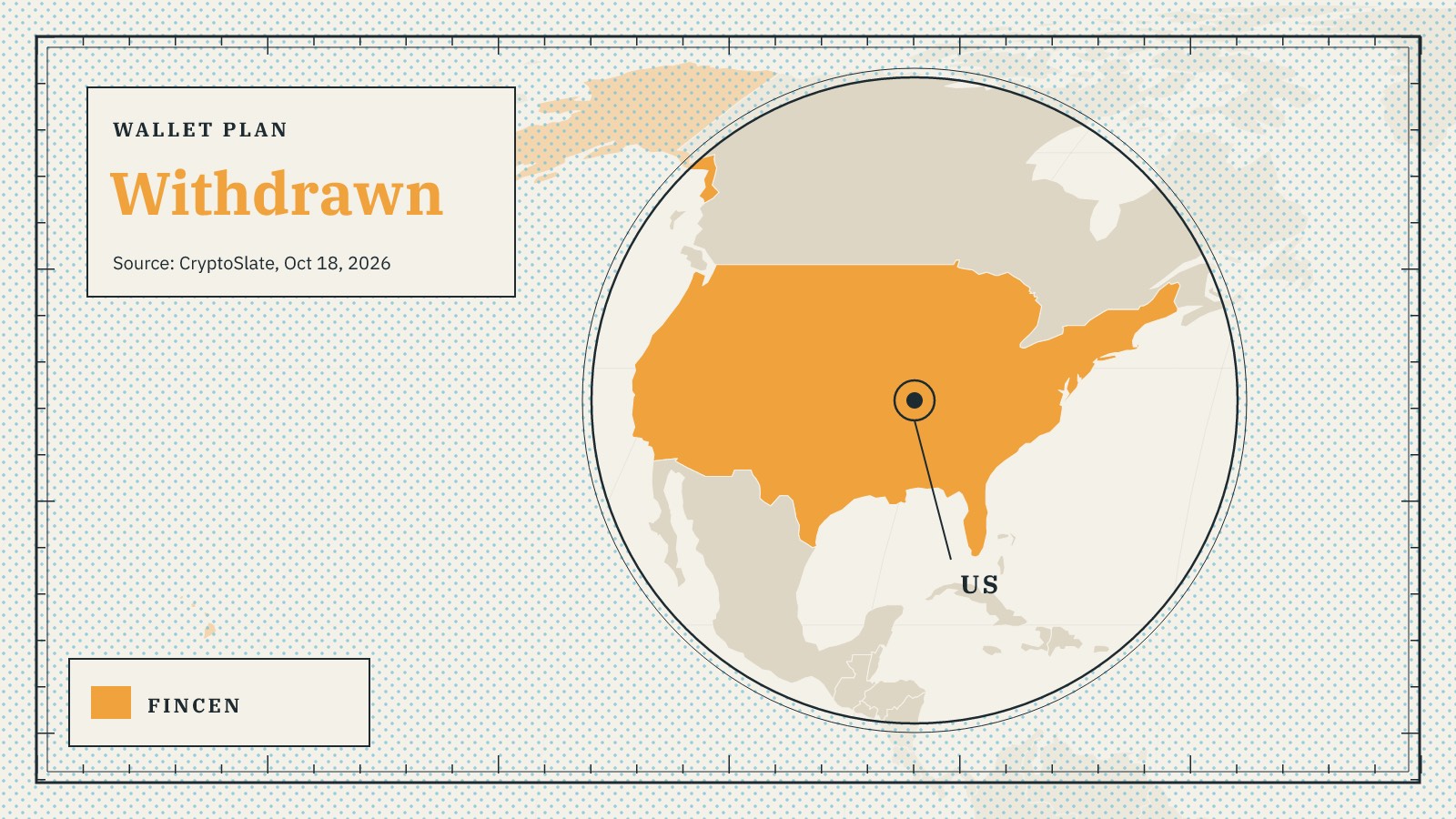
The US Treasury has formally dropped two old plans that would have made exchanges collect more personal details when crypto moves to or from wallets people control themselves. If you ever withdraw coins to your own wallet, or pay someone who uses one, this is a rule that will not arrive. This article looks at what the plans would have done, what stays the same, and what to keep in mind.
What happened
According to CryptoSlate, FinCEN, the Treasury bureau that enforces financial-crime reporting, announced on Oct. 5 that it was withdrawing two crypto proposals. Formal notices appeared in the Federal Register the next day: one for the 2020 self-hosted wallet plan, one for the 2023 mixing plan.
The wallet notice says FinCEN will take no further action on it. In practice, the extra requirements it described never took effect, and now they will not.
Oddly, the federal Unified Agenda had already marked the wallet plan as withdrawn on Apr. 12, 2024. CryptoSlate notes that the public documents do not explain why the formal notice came more than two years later.
What the wallet rule would have asked for
Treasury under Steven Mnuchin unveiled the plan on Dec. 18, 2020, citing national security and the use of crypto in financial crime. Banks and money-services businesses, including covered exchanges, would have reported certain transactions exceeding $10,000, including several smaller ones that together passed that amount within 24 hours.
Transfers above $3,000 would have carried extra recordkeeping, including the name and home address of the person on the other side. CryptoSlate gives an example: if you paid $5,000 from an exchange to a freelancer's own wallet, the exchange could have needed that freelancer's name and address, even though the freelancer was never its customer.
The plan would not have banned self-custody or made anyone register a wallet with the government. The pressure would have landed on the exchange in the middle, and through it, on you.
Crypto regulation and privacy: how the view shifted
Crypto regulation here means the rules that decide what exchanges and other firms must check and record about you. The first comment window was only 15 days, mostly over the holidays, and more than 7,500 comments had come in and been reviewed by Jan. 14, 2021, according to FinCEN. Coin Center, a policy group, objected mainly to the counterparty data and the rushed timetable, while accepting that cash-style reporting for large withdrawals had a logic.
The 2023 mixing plan, based on Section 311 powers of the PATRIOT Act, targeted certain international mixing transactions. Critics said its definition, which covered splitting transfers, hopping between addresses and swapping assets to hide details, could make exchanges flag ordinary activity.
Later reports changed the tone. A July 2025 White House working group report backed lawful users transacting privately on public blockchains, and a March 2026 Treasury report to Congress said lawful users might use mixers to shield their wealth, business payments, donations and spending.
Words to know
A few terms used above, in plain words:
- Self-hosted wallet: a wallet where you hold the private keys yourself, so no company has to approve your transfers.
- Counterparty: the person or wallet on the other side of a payment you send or receive.
- Mixing: techniques that blend or split transactions so the path of funds on a blockchain is harder to follow.
What to keep in mind
This withdrawal removes proposed extra duties. It does not remove the checks exchanges already make. CryptoSlate notes the government still treats money laundering as a serious risk and still relies on firms that already have reporting duties, so you should still expect identity checks when you open an account and questions about some transfers.
Privacy on a public blockchain is also limited by design. As CryptoSlate puts it, "The blockchain can show that a transaction took place, when it happened, how much was transferred, and which addresses were involved". Your name is not on the chain, but your activity is visible to anyone who looks.
Rules can also return in a new form, so a calm habit is to read your exchange's notices whenever its withdrawal steps change.
Sources
This analysis is based on the reports below. Open them for the full original coverage.
Written with AI assistance from the public sources listed below, with automated checks on figures and quotes. It is not investment advice. Spotted an error? Email hello@finvane.blog.
For education only, not financial advice. Crypto assets are volatile and you can lose money.
Get one like this every morning
A 5-minute briefing in your inbox each weekday. Free, unsubscribe anytime.
Prefer quick updates? Follow @pakaoqp on TelegramMarket now
Latest news
- Bitcoin Core merges privacy fix for its opt-in private broadcast featureCryptoSlate · October 9, 2026
- Senator Blumenthal questions Cantor Fitzgerald over its Tether tiesCoinDesk · October 9, 2026
- Ethereum's Sepolia testnet activates Glamsterdam with a bigger gas limitDecrypt · October 9, 2026
- Greece drafts 15% tax on crypto capital gains, reports sayBitcoin Magazine · October 9, 2026