Crypto Regulation: CFTC Targets Offshore Exchanges
On this page
United States regulators are urging international crypto exchanges to register domestically and adopt federal cybersecurity standards. The move follows recent security concerns and aims to give retail account holders clearer protections under American rules. In this guide, we break down what this proposal entails and how it could change the way you store and trade your digital assets.
The federal push to supervise overseas platforms
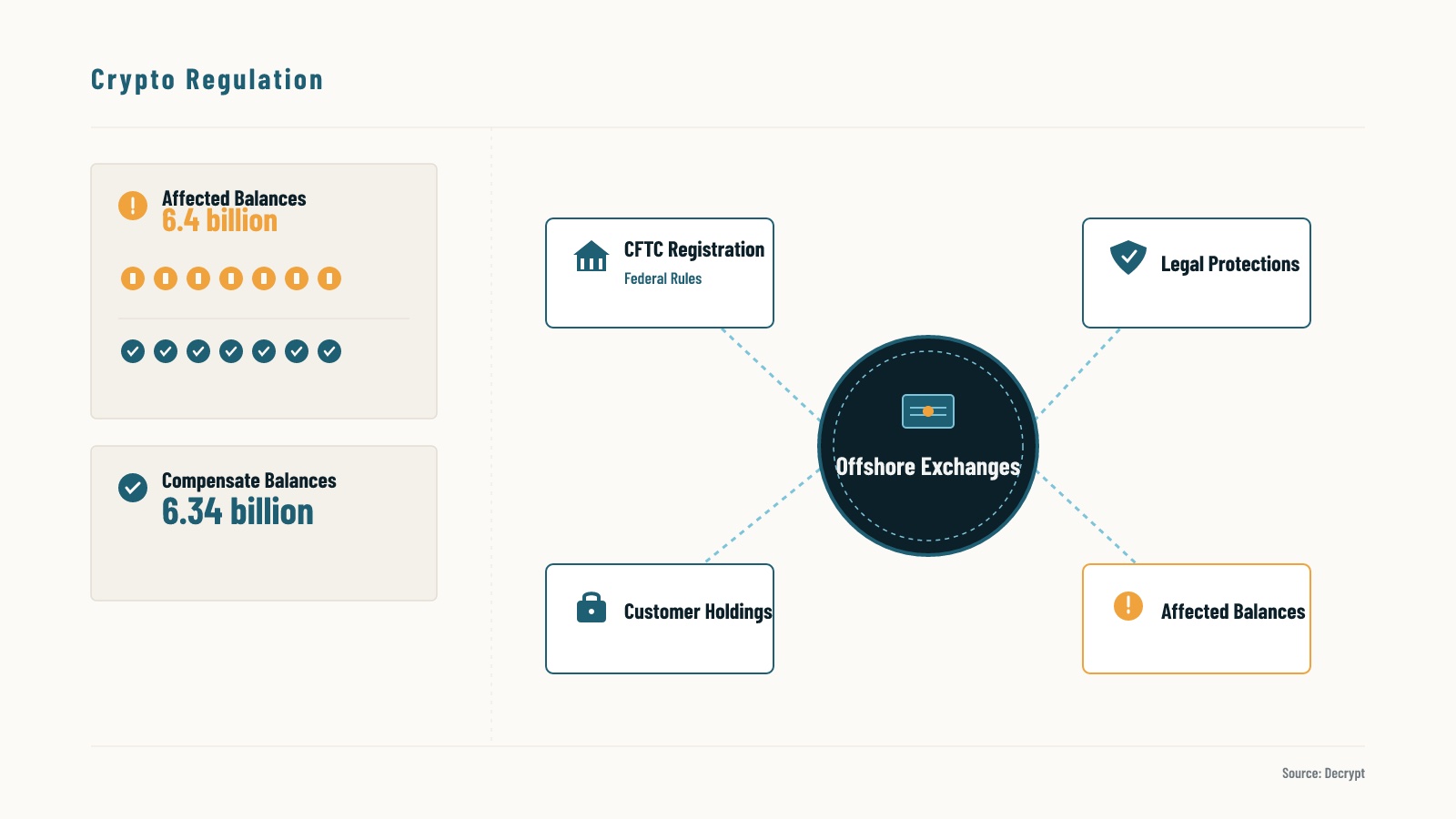
United States Commodity Futures Trading Commission (CFTC) Chair Michael Selig has urged foreign crypto trading platforms to formally register in the United States. His remarks came after a 6.4 billion dollar theft struck Binance, bringing fresh scrutiny to how international platforms secure their trading environments.
Speaking on CNBC on Friday, Selig argued that the security failure supported new crypto regulations that his agency introduced earlier this month. As Decrypt reported, the CFTC chairman stated that the event "proves our exact point" regarding the need for strict, standardized oversight of digital asset marketplaces.
Binance committed 6.34 billion dollars to compensate affected balances while stating customer holdings remained fully safeguarded. Even so, federal officials believe relying on voluntary corporate compensation is not a substitute for enforceable legal safeguards that protect public users before an incident occurs.
What is crypto regulation for offshore venues?
Crypto regulation in this context refers to applying domestic market rules, mandatory audits, and formal technical requirements to trading platforms operating outside United States borders. Selig noted that unmonitored offshore operators fail to provide the standard account safeguards customary in United States financial markets. Regulators stated cross-border exchanges handling substantial volumes require direct supervision to protect overall market integrity against technical flaws.
Under current market practices, international platforms often base their operations in jurisdictions with flexible guidelines, allowing them to list a wide variety of tokens and products quickly. However, when an overseas venue does not hold a domestic license, everyday users lack direct access to established regulatory complaint mechanisms and statutory balance protections.
The CFTC chair outlined a voluntary federal pathway where overseas venues could register and comply with standard American cybersecurity rules. This proposed framework would invite foreign platforms to implement cybersecurity safeguards equivalent to domestic American regulatory benchmarks, narrowing the gap between traditional banking security and offshore crypto custody.
Platform permissions versus underlying blockchain security
When large security breaches make headlines, many newcomers assume that the underlying cryptocurrency network has failed. Selig explained that the incident exploited platform permissions rather than compromising the underlying Ethereum blockchain network.
This technical distinction is vital for every beginner to understand. The core blockchain protocol continued operating as designed, validating blocks and enforcing cryptographic math without interruption. The vulnerability existed within the internal software layers, operational accounts, and key authorization routines managed by the exchange itself.
Selig also pointed out that public blockchain ledgers allow regulators to trace funds even when illicit actors employ obfuscation tools. Because transactions on public ledgers leave permanent digital footprints, investigators can track movements between addresses across the broader network.
For retail holders, this means your primary risk on a centralized platform is usually the platform's internal operational architecture, rather than the security of the public blockchain itself. A regulated framework focuses heavily on tightening these internal controls, limiting administrative access, and requiring independent verification of custody routines.
Cross-border jurisdictional hurdles and legal proposals
Establishing regulatory authority over entities incorporated in foreign nations is rarely straightforward. Compelling global platforms to submit to American registration involves unresolved jurisdictional obstacles across international borders. Different sovereign nations maintain their own independent legal systems, which can limit the extraterritorial reach of United States regulators.
The agency advanced its own regulatory agenda directly after legislative efforts stalled in the Senate under the Clarity Act. Rather than waiting for comprehensive congressional legislation, the CFTC has sought to utilize its existing administrative powers to establish operational expectations for digital asset trading platforms.
CFTC proposals delivered to the White House seek to classify event contracts as swaps and subject digital asset exchanges to federal supervision, according to Decrypt. If accepted, these proposals could establish a clear supervisory perimeter, bringing trading venues that cater to active market participants under a unified federal umbrella.
For everyday crypto users, a formal registration regime would mean clearer terms of service, independent third-party cybersecurity audits, and legally enforceable custody standards. It would also clarify which agency oversees your trading activities and where you can turn if a platform runs into technical difficulty.
Words to know
Understanding these foundational terms can help you better evaluate how proposed regulatory frameworks affect the security of your exchange accounts and digital assets. Clear definitions make it easier to separate core protocol safety from exchange-level operational controls.
- Offshore exchange: A cryptocurrency trading platform incorporated and based outside the jurisdiction where its global users reside, often subject to different local operational rules.
- Platform permissions: The internal access rights, administrative keys, and authorization settings that govern how a platform's software interacts with assets and databases.
- Custody safeguards: Legal and technical measures that an exchange uses to keep client assets separated, secure, and available for withdrawal at all times.
What to keep in mind for your digital assets
While federal discussions continue, offshore platforms operate largely under their current international business models. Even when a major platform covers losses using internal capital, voluntary compensation remains an operational decision by private executives rather than a statutory right established under federal law.
As an individual holder, you should evaluate where your exchange is licensed and what legal protections apply to your account balance. Understanding whether a platform submits to domestic regulatory audits can help you assess the operational risks of storing your funds on that venue.
You do not need to alter your routine based on regulatory proposals alone, but keeping up with supervisory shifts helps you make calm, informed choices about exchange custody and long-term storage safety.
Sources
This analysis is based on the reports below. Open them for the full original coverage.
- Finvane Telegram channelFollowing a record 6.4 billion dollar theft from exchange Binance, Commodity Futures Trading Commission Chair Michael Selig stated that…
- DecryptBinance Hack Shows Why Offshore Exchanges Need US Oversight, CFTC Chair Says
Written with AI assistance from the public sources listed below, with automated checks on figures and quotes. It is not investment advice. Spotted an error? Email hello@finvane.blog.
For education only, not financial advice. Crypto assets are volatile and you can lose money.
Get one like this every morning
A 5-minute briefing in your inbox each weekday. Free, unsubscribe anytime.
Prefer quick updates? Follow @pakaoqp on TelegramMarket now
Latest news
- Bitcoin Core merges privacy fix for its opt-in private broadcast featureCryptoSlate · October 9, 2026
- Senator Blumenthal questions Cantor Fitzgerald over its Tether tiesCoinDesk · October 9, 2026
- Ethereum's Sepolia testnet activates Glamsterdam with a bigger gas limitDecrypt · October 9, 2026
- Greece drafts 15% tax on crypto capital gains, reports sayBitcoin Magazine · October 9, 2026