Position sizing: decide how much to risk before you buy
On this page
Most beginners spend their time deciding what to buy. Experienced investors spend just as much time deciding how much. Position sizing is the habit that keeps one bad idea from doing serious damage to your account.
Risk the loss, not the position
Position sizing starts with a question: if this idea is wrong, how much of my account am I willing to lose? Many traders use a small fixed percentage, often between 0.5% and 2% per idea. The exact number is personal; the point is to decide it before you buy.
The amount you risk is not the same as the amount you invest. Risk depends on how far the price can move against you before you accept that you were wrong.
A worked example
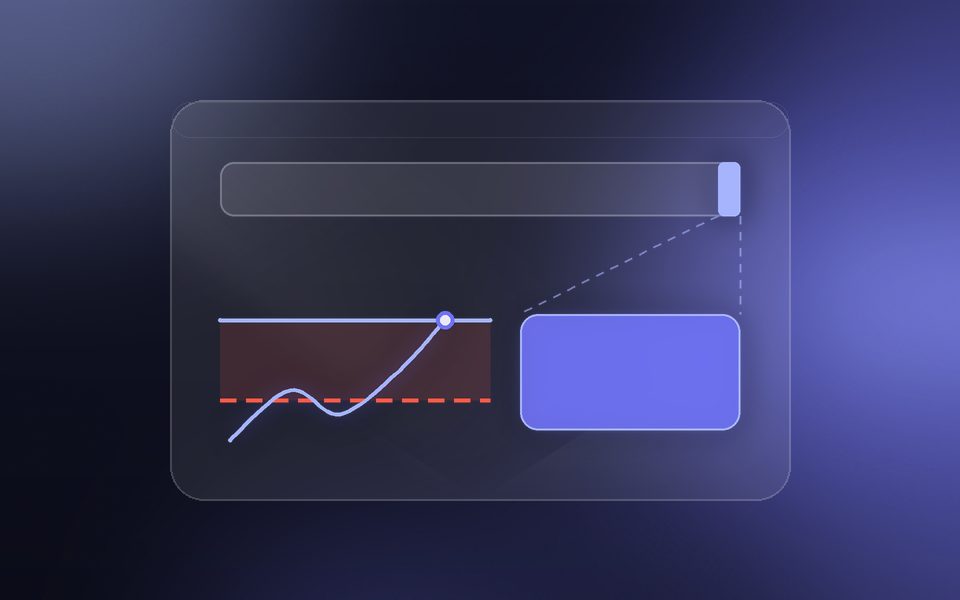
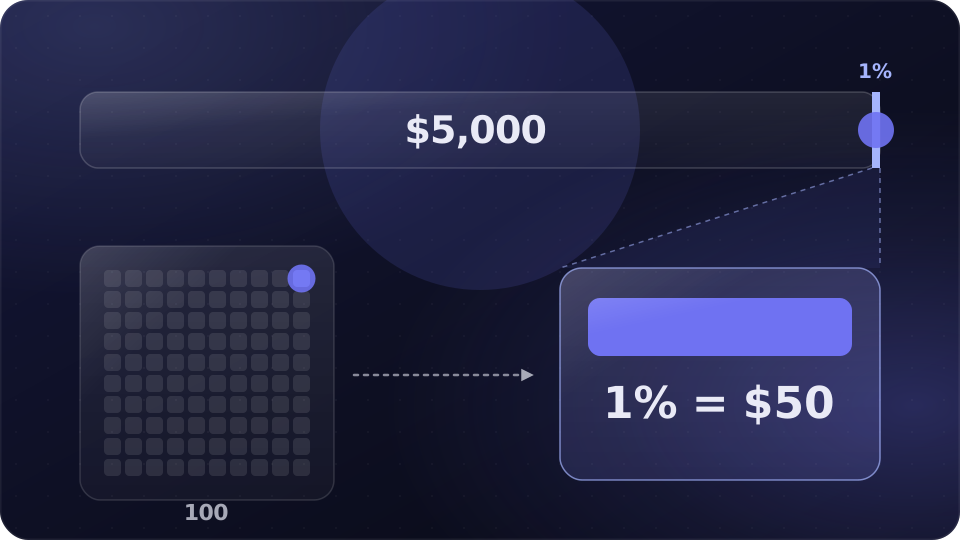
Assume an account of $5,000 and a rule of risking 1% per idea, which is $50. You plan to buy a coin and decide that if it falls 8% from your entry, your idea is invalid and you will sell.
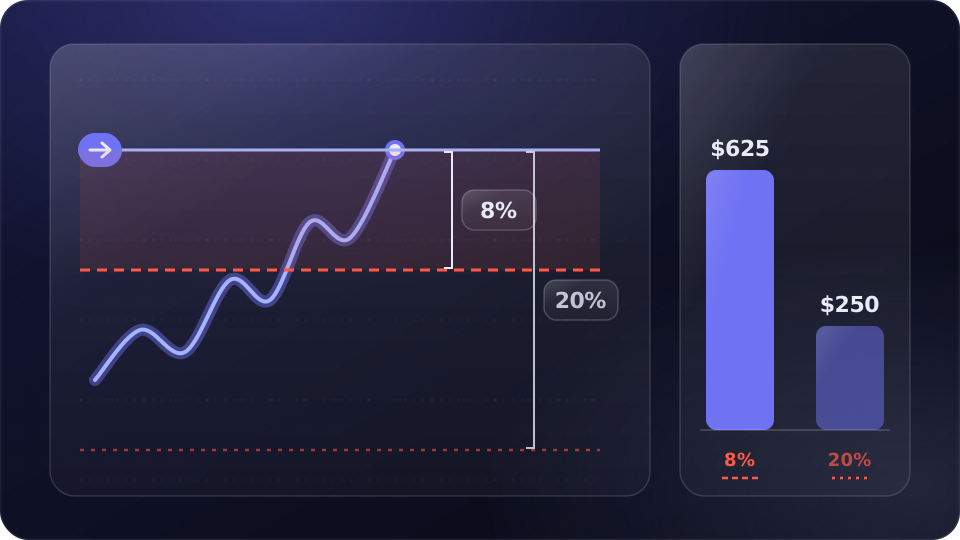
The position size is the risk divided by the stop distance: $50 ÷ 0.08 = $625. If the coin drops 8% and you sell, you lose about $50, plus fees and slippage. If your stop needs to be 20% away instead, the position shrinks to $50 ÷ 0.20 = $250.
Why the stop distance matters
A wider stop gives the price more room to move but forces a smaller position. A tight stop allows a larger position but gets hit more often by normal volatility. Crypto prices can move 5–10% in a day without any news, so a stop that is too tight often turns into a series of small, unnecessary losses.
Common mistakes
- Raising the position size after a few wins, just when confidence is highest.
- Moving the stop further away once the price approaches it, which quietly increases the risk.
- Using leverage to make a small account feel bigger. With futures, losses can exceed the margin you put in.
- Holding several positions in coins that move together, which adds up to one large bet.
Putting it into practice
Before each trade or purchase, write down three numbers: your entry price, the price at which your idea is wrong, and the amount you are willing to lose. The position size follows from those numbers, so the decision is made before emotions get involved.
Long-term investors who never use a stop can apply the same idea differently. Instead of a stop distance, they ask how far the asset could realistically fall — in crypto, drops of more than 50% have happened more than once — and size the holding so that such a fall would hurt but would not change their life.
For education only, not financial advice. Crypto assets are volatile and you can lose money.
Get one like this every morning
A 5-minute briefing in your inbox each weekday. Free, unsubscribe anytime.
Or follow the Telegram channel @pakaoqpMarket now
Latest news